
History of International Academy of Science and the Doctor of Research Degree
The Research-to-Commercialization Gap
By 1984, industry had long faced a critical challenge in identifying professionals equipped to bridge the gap between fundamental scientific discovery and successful commercialization. While traditional doctoral programs excelled in preparing scholars for academic research, they frequently left graduates without the specialized training required to translate breakthroughs into viable technologies and products. This void was strikingly apparent to three visionaries — Dr. Geoffrey Pardoe, Professor Michael Laughton, and Roger E. Billings — who met that year while traveling to a technology conference near London.
The conversation revealed a shared recognition: both Pardoe and Billings had encountered the shortage of personnel capable of advancing cutting-edge technologies from the laboratory to the marketplace. Beyond the workforce need, there was a clear requirement for a distinctive doctoral-level credential that would enable industry executives to readily identify individuals trained in applied research and innovation.
Pardoe and Laughton had independently envisioned such a program for years and had outlined its core curriculum requirements. When Pardoe proposed housing it within an established institution such as the University of London, Laughton replied with characteristic insight: “Not even the Queen of England could get that approved!”
The Doctor of Research (D.R.) Degree
By the conclusion of their meeting, the three leaders had formulated a plan for an independent institution with a doctoral program dedicated to applied science. Sir Geoffrey Pardoe invited Roger Billings to become the program’s inaugural candidate. Adhering to the traditional doctoral model, Pardoe served as dissertation professor, with Professor Laughton joining the committee. They determined that a third member—preferably an American with distinguished achievements in applied technology rather than purely academic credentials—was essential.
Dr. Willis Hawkins, President of Lockheed California Company and a visionary aeronautical engineer, agreed to serve. Billings’ doctoral research project was titled The Development of a Commercially Viable Hydrogen Fuel Cell for Automotive Applications.
Under the rigorous supervision of Pardoe, Laughton, and Hawkins, Billings completed his research, and in 1986, the committee informally conferred upon him the first Doctor of Research degree. In 1991, the International Academy of Science was formally established and received official authorization by the Missouri Coordinating Board for Higher Education to grant doctoral degrees. At that time, Billings was formally awarded the Doctor of Research Degree.
Legacy
The Doctor of Research degree stands as a testament to the vision of its founders—a credential designed by industry leaders for industry leaders. It recognizes not only scholarly excellence but the practical ability to transform scientific knowledge into technologies that advance society.
Today the IAS education program has expanded to include a full-range of undergraduate and graduate degrees and is administered through its education arm, the Institute of Science and Technology (IST). The program remains committed to its founding principles of fostering “inventioneering” and preparing innovators who deliver real-world impact.
IAS Founders
The International Academy of Science owes its strength and prestige to the extraordinary caliber of its Founders.
Sir Geoffrey K. Pardoe (1928–1996)
A pioneering British aerospace engineer, Sir Geoffrey Pardoe made seminal contributions to the United Kingdom’s missile and space programs. As Senior Aerodynamicist at Armstrong Whitworth (1949–1951), he developed the Sea Slug missile. At de Havilland (1951–1956), he served as Chief Aerodynamicist on the Firestreak missile and later led development of the Blue Streak ballistic missile (1956–1960). As Chief Project Engineer of the Space Division at Hawker Siddeley Dynamics (1960–1969), he proposed the Black Prince launcher and advocated for an independent British space program, efforts that contributed to the establishment of the British National Space Centre in 1985.
Pardoe founded General Technology Systems in 1973 and later served as Managing Director (1985–1987) and Deputy Chairman (1987–1993) of Surrey Satellite Technology Ltd., advancing small-satellite technology. He served as President of the Royal Aeronautical Society (1984–1985) and Chairman of the Watt Committee on Energy (1986). His honors include an OBE (1988), Fellowship in the Royal Aeronautical Society (1968), and Fellowship in the Royal Academy of Engineering (1988). The Geoffrey Pardoe Space Award continues to honor his legacy.
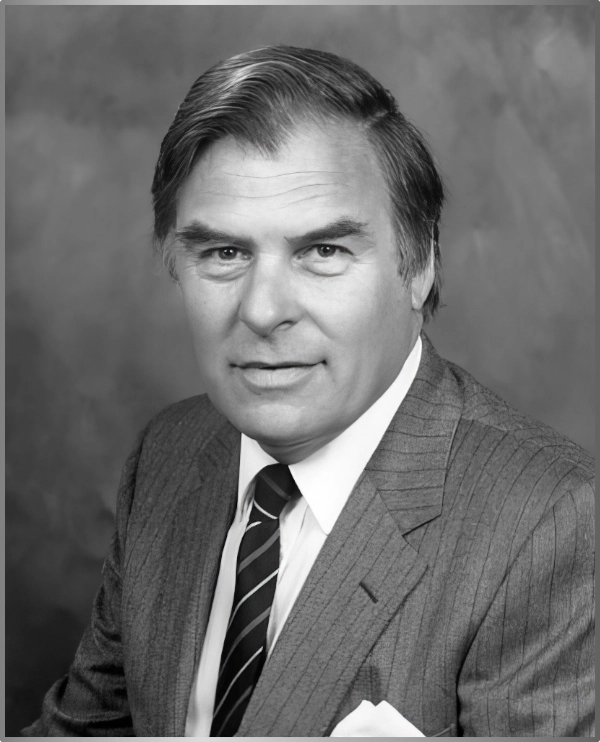
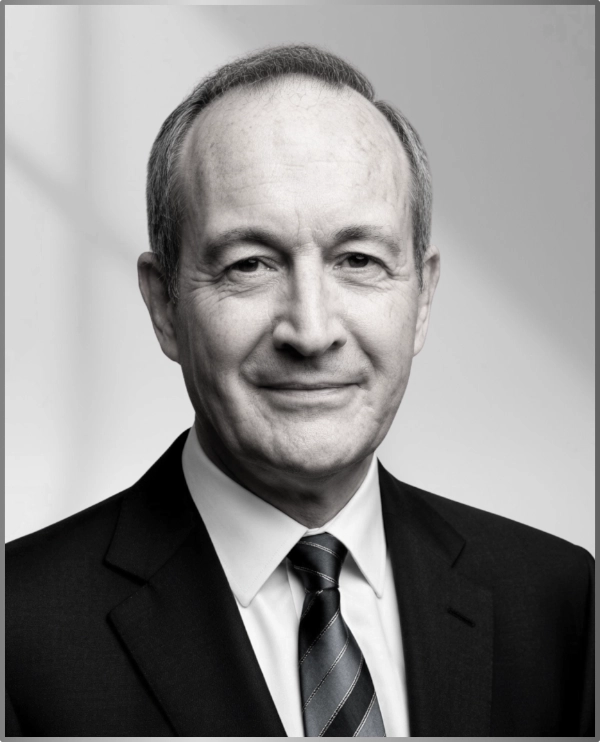
Professor Michael A. Laughton
Emeritus Professor of Electrical Engineering at Queen Mary, University of London, and Visiting Professor at Imperial College London, Professor Laughton is a distinguished scholar and policy advisor. He attended King Edward VI Five Ways School in Birmingham and Etobicoke Collegiate Institute in Toronto before earning a BASc from the University of Toronto (1957), and a PhD (1965) and DSc(Eng) (1976) from the University of London.
He served as Pro-Principal of Queen Mary and Westfield College and Dean of Engineering for the University of London. Professor Laughton co-edited the authoritative Electrical Engineer’s Reference Book (now in its 16th edition). A Fellow of the Royal Academy of Engineering, he has represented the United Kingdom on the Energy Committee of the European Council of Applied Sciences and Engineering and has advised UK Parliamentary committees on renewable energy and efficiency.
As a persistent champion of the value of practical innovation beyond conventional academic pathways, Laughton astutely observed, “The industrial revolution happened because of craftsmen-inventors.… It did not spring from the minds of university-educated people. For too long have we worshipped at the altar of paper qualifications to the exclusion of a wider view. We must recognize the enormous value of the true innovator in effecting the technical changes in society.”
Dr. Willis M. Hawkins (1913–2004)
A legendary figure in American aviation and defense, Dr. Willis Hawkins enjoyed a distinguished career spanning more than five decades at Lockheed Corporation. His extensive contributions include the P-80 Shooting Star (America’s first operational jet fighter), the supersonic F-104 Starfighter, the L-133 (America’s first jet prototype), and the iconic C-130 Hercules transport aircraft, which he championed in 1951.
In 1953 he was instrumental in the founding of Lockheed Missiles and Space Company and served as Vice President and later President of Lockheed California Company. His notable work in Lockheed’s elite Skunk Works division included landmark projects such as the U-2 spy plane and SR-71 Blackbird.
Hawkins also served as Assistant Secretary of the U.S. Army for Research and Development (1962–1965), advancing the Polaris submarine-launched ballistic missile and the M1 Abrams tank. His honors include the Navy Distinguished Public Service Award (1961) and the National Medal of Science (1988). He received an honorary Doctor of Engineering degree from the University of Michigan (his alma mater) and a Doctor of Science degree from Illinois College.
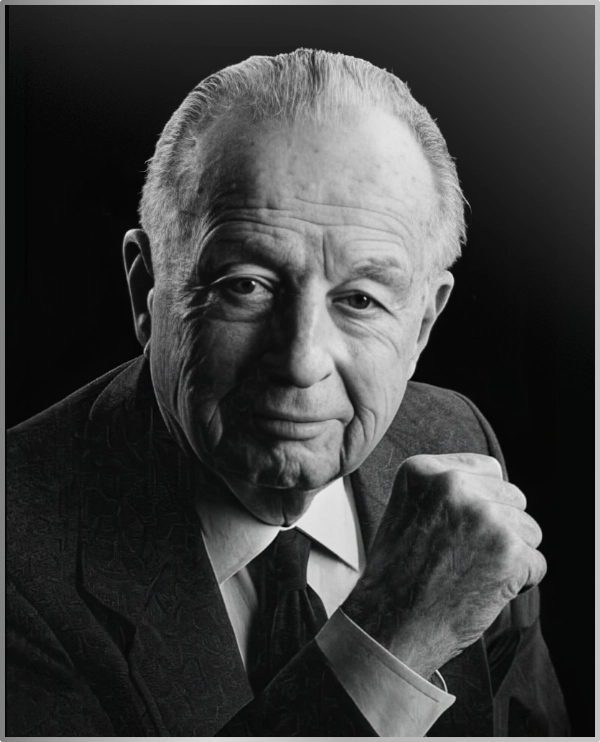
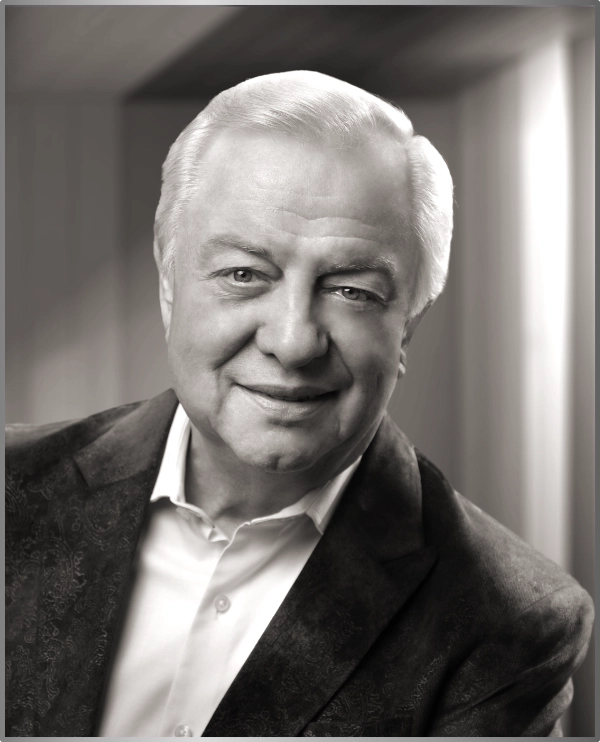
Dr. Roger Billings
Dr. Roger E. Billings, known as the “Godfather of Hydrogen Energy” and “father of inventioneering,” is a visionary scientist, inventor, and entrepreneur whose contributions span renewable energy, computer technology, cybersecurity, and education. As a high school senior, he built the world’s first hydrogen-powered automobile and later developed the first hydrogen fuel cell vehicle, earning recognition in TIME magazine as “Dr. Hydrogen.” He received the Ten Outstanding Young Men award for his pioneering work.
Billings created the Billings Microsystem, one of the earliest personal computers, and patented the foundational client/server computing model (U.S. Patent 4,714,989), which he later donated to the International Academy of Science. He founded WideBand Corporation and developed B2 Cryptography, the encryption protocol powering GoldKey technology. As President of IAS, Billings launched the Acellus Learning System (2001). He currently hosts the weekly Science LIVE broadcast, a cornerstone of the Roger Billings Mentoring Program. In 2025, he was honored with the Claes Nobel Educator of Distinction award. He earned his Bachelor of Science degree from Brigham Young University, where he studied chemistry, physics, chemical engineering, mechanical engineering, and electrical engineering. In 1991, he received the first Doctor of Research degree issued by the International Academy of Science, an institution he co-founded.
IAS Official Authorization and Program Integrity
In 1991, the International Academy of Science—a Missouri-based 501(c)(3) non-profit organization—was formally established and received legal authorization from the Missouri Coordinating Board for Higher Education to grant doctoral degrees. The Academy has awarded the Doctor of Research degree in strict accordance with this authority.
Addressing Historical Misconceptions
During the 1990s, while the Academy pursued enforcement of the client/server patent donated by Dr. Billings, it encountered prolonged litigation with Novell, Inc. As part of its legal strategy, Novell issued public statements questioning the validity of Dr. Billings’ degree. These claims were without foundation. The degree was conferred following rigorous applied research under the supervision of a distinguished international committee and was awarded under the full legal authority granted to the Academy by the State of Missouri. The International Academy of Science continues to uphold the highest standards in its doctoral program.
IAS Programs
The International Academy of Science (IAS) has expanded its educational programs through its dedicated post-secondary educational arm, the Institute of Science and Technology (IST), which offers a full range of graduate and undergraduate degree programs in high-technology fields. These programs continue the Academy’s longstanding commitment to rigorous, applied learning and original research.
Today, IAS operates as a global membership organization dedicated to fostering collaboration among scientists and advancing scientific knowledge. In addition to education, it is recognized as a sponsor of pioneering initiatives in high-impact fields such as energy and cybersecurity.