
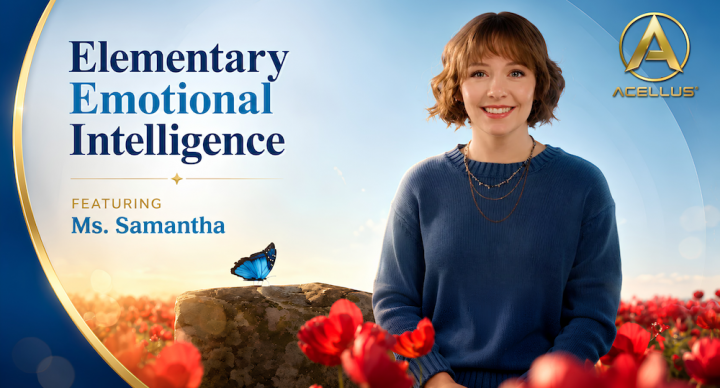
Elementary Emotional Intelligence
Course Features
Course Details
Course Overview
Elementary Emotional Intelligence helps young learners understand their feelings and build the social-emotional skills they need to thrive at home, at school, and in their communities. Through engaging videos, relatable stories, and interactive activities, students explore what emotions are, how feelings show up in the body, and how to name and manage emotions like happiness, sadness, anger, and fear. The course is built around the five core competencies of social-emotional learning—self-awareness, self-management, social awareness, relationship skills, and responsible decision-making—and weaves in respect for diverse cultures, backgrounds, and perspectives throughout.
As the course progresses, students move from recognizing their own emotions and strengths to regulating their feelings, setting personal goals, and developing a growth mindset. They learn to see situations from others' points of view, show empathy and kindness, and appreciate the rules and norms that help groups work well together. Finally, students practice the communication, teamwork, and conflict-resolution skills that build strong friendships, and they apply critical thinking to make safe, ethical, and constructive choices. By the end of the course, students will be able to apply emotional intelligence competencies to navigate personal and social challenges, fostering well-being, positive relationships, and a sense of belonging in diverse settings.
Sample Lesson - Introduction
 This course was developed by the International Academy of Science.
Learn More
This course was developed by the International Academy of Science.
Learn More
Scope and Sequence
Unit 1 – Introduction to Emotional Intelligence This unit lays the foundation by introducing what emotional intelligence is and why it matters in everyday life. Students learn the five core SEL competencies, explore simple feeling words, and discover how emotions show up in the body. They begin examining how personal traits, family, and culture shape feelings, and they consider ideas like belonging, personal agency, and treating others with care. Real-life and historical examples show emotional intelligence in action, and students set personal goals for the learning ahead.
Unit 2 – Developing Self-Awareness Students turn inward to recognize and reflect on their own emotions, strengths, and identity. They learn to spot and understand happiness, sadness, anger, fear, and mixed emotions, and to connect thoughts with feelings. The unit celebrates personal strengths, reframes weaknesses as growth opportunities, and introduces confidence-building, a growth mindset, healthy living habits, and mindfulness. Through journaling, art, music, and "feelings detective" activities, students develop a richer, more honest understanding of who they are.
Unit 3 – Mastering Self-Management Building on self-awareness, this unit teaches students to regulate their emotions and take charge of their actions. They practice calming strategies for strong feelings, stress-busting techniques, self-control, and impulse management. Students set and track personal and group goals, build organization and planning skills, stay motivated, and develop everyday routines and habits. Leadership, resilience after disappointment, and managing feelings during play and disagreements round out their self-management toolkit.
Unit 4 – Building Social Awareness This unit shifts focus to understanding and appreciating others. Students learn to see situations from different perspectives, show empathy and gratitude, and recognize the strengths of friends. They explore fairness, social norms, and the rules that guide behavior, and they consider how family, culture, media, and past experiences shape how people act. Community helpers, kindness projects, and viewpoint activities help students practice compassion and respect for diverse perspectives.
Unit 5 – Enhancing Relationship Skills Students apply their growing awareness to building and maintaining positive relationships. The unit develops communication and active-listening skills, friendship-building, teamwork, and peaceful conflict resolution. Students practice asking for and offering help, standing up for friends, resisting peer pressure, reading body language, and respecting different backgrounds and cultures. Leadership, trust-building, and long-term friendship strategies prepare students to be supportive peers and peacemakers.
Unit 6 – Practicing Responsible Decision-Making In the final unit, students bring all five competencies together to make thoughtful, ethical choices. They learn problem-solving steps, critical-thinking basics, and how to weigh consequences. Students explore how their decisions affect themselves, their families, and their neighborhoods, and they practice telling right from wrong and making safe, constructive choices that promote personal and community well-being.
More Courses by this Instructor

 Acellus