
Preschool Signing
Course Features
Course Details
Course Overview
Preschool Signing introduces young children to American Sign Language through the everyday world they already love to explore. Across eighteen playful, themed units, children learn to recognize and match the ASL signs for a wide vocabulary — colors, shapes, family, feelings, foods, weather, transportation, body parts, and the animals of the farm, jungle, woodland, sea, and garden.
Along the way they meet the letters of the alphabet and their handshapes, learn to sign and count the numbers one through ten, and build the early math and thinking skills — sorting, patterning, matching opposites, and telling same from different — that get little learners ready for school. Every unit pairs signing with warm, concrete themes so that new vocabulary arrives inside a story a child can picture, making the signs easier to remember and more fun to use. By the end of the course, children can communicate a rich set of everyday ideas in ASL while growing their language, math, and social-emotional foundations.
Sample Lesson - Time for Fun!
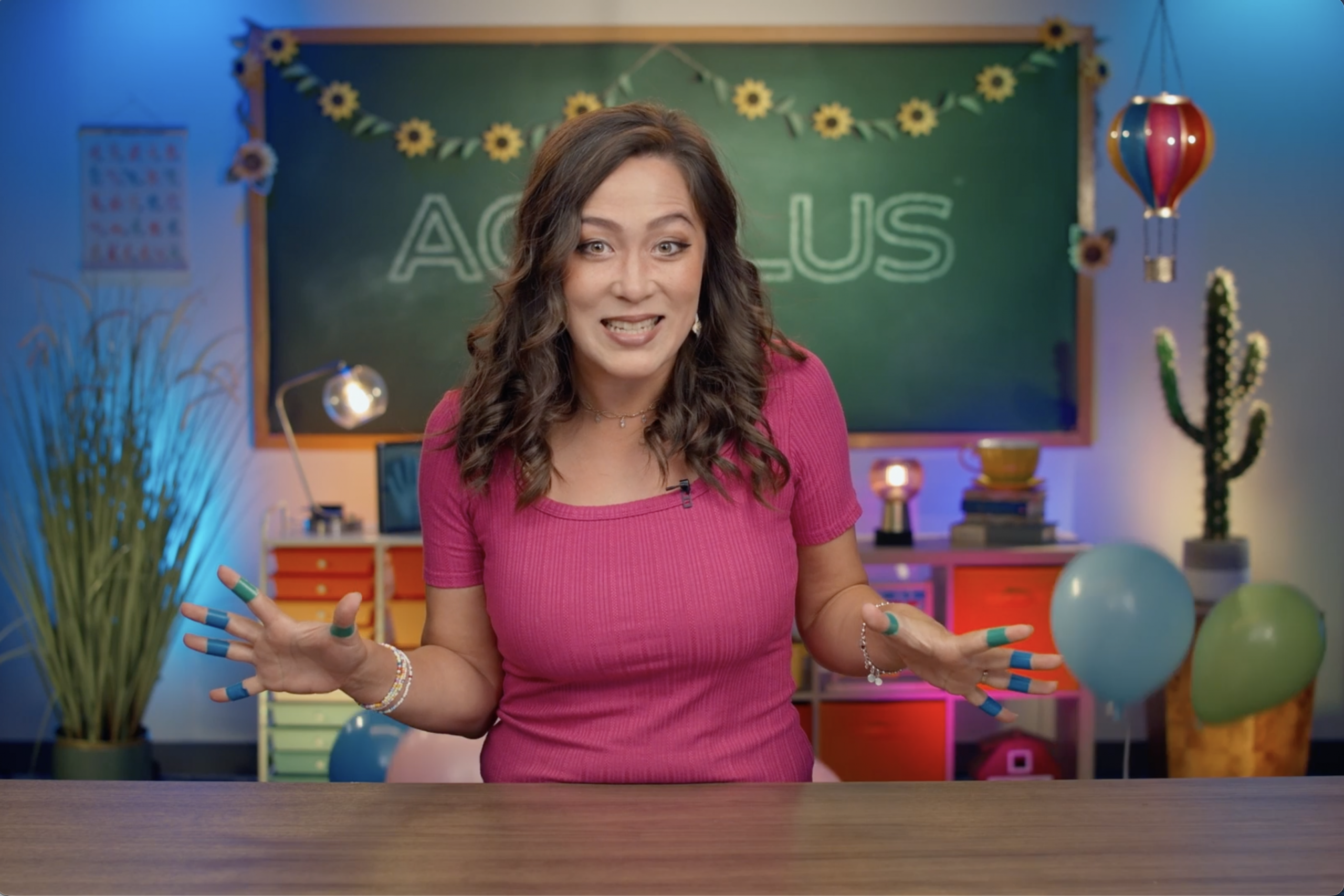
 This course was developed by the International Academy of Science.
Learn More
This course was developed by the International Academy of Science.
Learn More
Scope and Sequence
Unit 1 — Colors Paint My World Children begin with the colors all around them, learning to identify green, red, yellow, blue, orange, and purple and match each to its ASL sign. They meet their first numbers — signing 1 and 2 and matching them to small sets — recognize the letters A and X and their handshapes, and practice sorting objects by color.
Unit 2 — So Many Shapes I See The focus turns to shapes: children learn the ASL signs for circle, square, triangle, rectangle, and star. They add the numbers 3, 4, and 5 to their counting, recognize the letter J and its handshape, extend a simple repeating pattern, and practice following a one-step direction.
Unit 3 — My Family, My Story Children learn to sign hello, family, friend, and baby, and to match family members to their signs. They continue counting with the numbers 6 and 7 and recognize the letter B and its handshape, connecting new signs to the people they know best.
Unit 4 — Emotions and Feelings of Mine This unit builds early emotional vocabulary: children match the signs for happy, sad, mad, and scared to the faces that show them. They learn the good-manners signs please, thank you, and share, add the numbers 8 and 9, and recognize the letter Q and its handshape.
Unit 5 — Vroom-Vroom, Zoom Machines Things that go take center stage. Children identify and match the ASL signs for car, bike, train, boat, and airplane, learn the signs for stop and go, complete their count to 10, and recognize the letters C and W and their handshapes.
Unit 6 — Twinkle, Twinkle, Up in Space Children reach for the stars with the signs for moon and rocket. They practice counting down from ten and sequencing the numbers 1 through 10, choose rhyming words, sort space objects, and recognize the letters S and E and their handshapes.
Unit 7 — Away in the Meadow Nature comes alive as children learn outdoor signs and sequence how a seed grows. They sort and count natural objects such as rocks, identify things found outdoors, and recognize the letters M and F and their handshapes.
Unit 8 — Journey in the Jungle Children explore the jungle by matching the ASL signs for bird, hippo, lizard, lion, frog, monkey, giraffe, elephant, and tiger to each animal. They count a group of animals, recognize the letter T and its handshape, and figure out an animal from clues.
Unit 9 — Fun Around the Barnyard Down on the farm, children identify and match the signs for chicken, cat, dog, and pig, and learn about healthy foods with the signs for fruit and vegetable. They match each animal to its sound and its job and recognize the letter V and its handshape.
Unit 10 — It Tastes Good to Me Mealtime signing includes the foods pizza, soup, cheese, and egg, and more, plus the useful signs like and don't like. Children count and sort food items and recognize the letters Y, I, and G and their handshapes.
Unit 11 — Cloudy, Sunny, Snowy Days Children learn the weather signs rain, snow, and thunder and the four seasons — spring, summer, autumn, and winter — along with activities that belong to each season. They count groups of objects and recognize the letters R and L and their handshapes.
Unit 12 — Feathers and Furry Friends The woodland comes to life as children learn the signs for fox, bear, rabbit, turtle, frog, squirrel, and mouse and match each animal to its sound. They also recognize the letters N and Z and their handshapes.
Unit 13 — Sailing on the Deep Blue Sea Children dive underwater to identify and match the signs for sea creatures such as fish and octopus, count groups of them, and recognize the letters U, P, and O and their handshapes.
Unit 14 — My Happy, Healthy Body Children match the signs for body parts — nose, eyes, mouth, ears, and hands — and the five senses of see, hear, smell, taste, and touch. They learn healthy-habit signs like brushing teeth, washing hands, clean, and potty, sort wake-up and bedtime activities, and follow a movement direction.
Unit 15 — All the Opposites This unit builds early thinking skills through the opposites up/down, fast/slow, and hot/cold. Children classify objects as same or different and loud or quiet, match items to their opposites, match shapes, and recognize the letter K and its handshape.
Unit 16 — Helping Out at Home Children learn the signs for different types of clothing, such as shoes, hat, shirt, socks, and more. They also identify the parts of a house and the chores that help at home. They match clothing to body parts, sort laundry, and practice identifying an item by smell.
Unit 17 — My Itsy-Bitsy Buzzing Friends The garden buzzes with the signs for bee and spider. Children observe the wonders of insects, sort bugs by attribute, find hidden bugs, match symmetrical halves, name the parts of a bug, and recognize the letter H and its handshape.
Unit 18 — My Favorite Things! The course closes by bringing it all together: children learn the sign for dinosaur, match letters to their handshapes and sequence the alphabet, count groups of objects, match facial expressions to feelings, pair opposites, sort foods, and recognize the letter D and its handshape.
More Courses by this Instructor

 Acellus