Pre-Linguistic Skills 1 – Nonverbal Communication
Course Features
Course Details
Course Overview
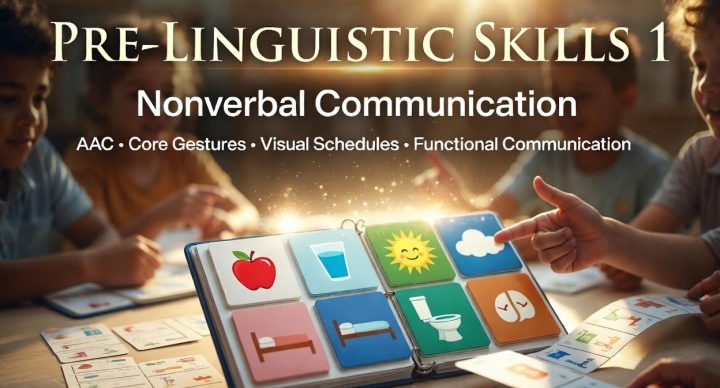
The Acellus course Pre-Linguistic Skills 1 - Nonverbal Communication introduces students to foundational picture-based communication skills (AAC) and core gestures to support functional and expressive communication. Students learn to use symbols and gestures to express needs, emotions, and daily routines, while practicing sequencing, visual schedules, and social interactions. Structured lessons help students apply these skills in real-life situations, promoting independence, social engagement, and functional communication at home and in school.
Sample Lesson - Requesting Music

 This course was developed by the International Academy of Science.
Learn More
This course was developed by the International Academy of Science.
Learn More
Scope and Sequence
UNIT 1: Core Communication & Daily Routines In this unit, students are introduced to the foundational skills needed to communicate using picture-based communication (AAC) and simple gestures. They learn that pictures, symbols, and gestures can help them express their wants, needs, and preferences even if they are not yet using spoken language. Students practice identifying and using essential communication concepts such as yes, no, more, all done, help, and eat/drink through highly visual, structured activities. They also begin learning how visual schedules support independence by sequencing familiar morning and evening routines. By the end of the unit, students will understand that pictures and gestures have meaning and can be used to communicate effectively across everyday environments.
UNIT 2: Expanding Social & Everyday Vocabulary Building on the foundational communication skills established in Unit 1, students expand their functional vocabulary by learning additional high-frequency gestures and AAC symbols used throughout daily life. They practice communicating common needs and participating in social interactions by requesting the bathroom, music, play, books, baths, and using socially appropriate expressions such as please and sorry. Students also learn communication concepts that support participation and self-advocacy, including stop, again, and go. Through repeated practice in meaningful daily scenarios, students strengthen their ability to recognize when and how to use these symbols to communicate with others. By the end of the unit, students will demonstrate increased independence in using picture-based communication to participate in routines, make requests, and engage in simple social exchanges.
More Courses by this Instructor

 Acellus